
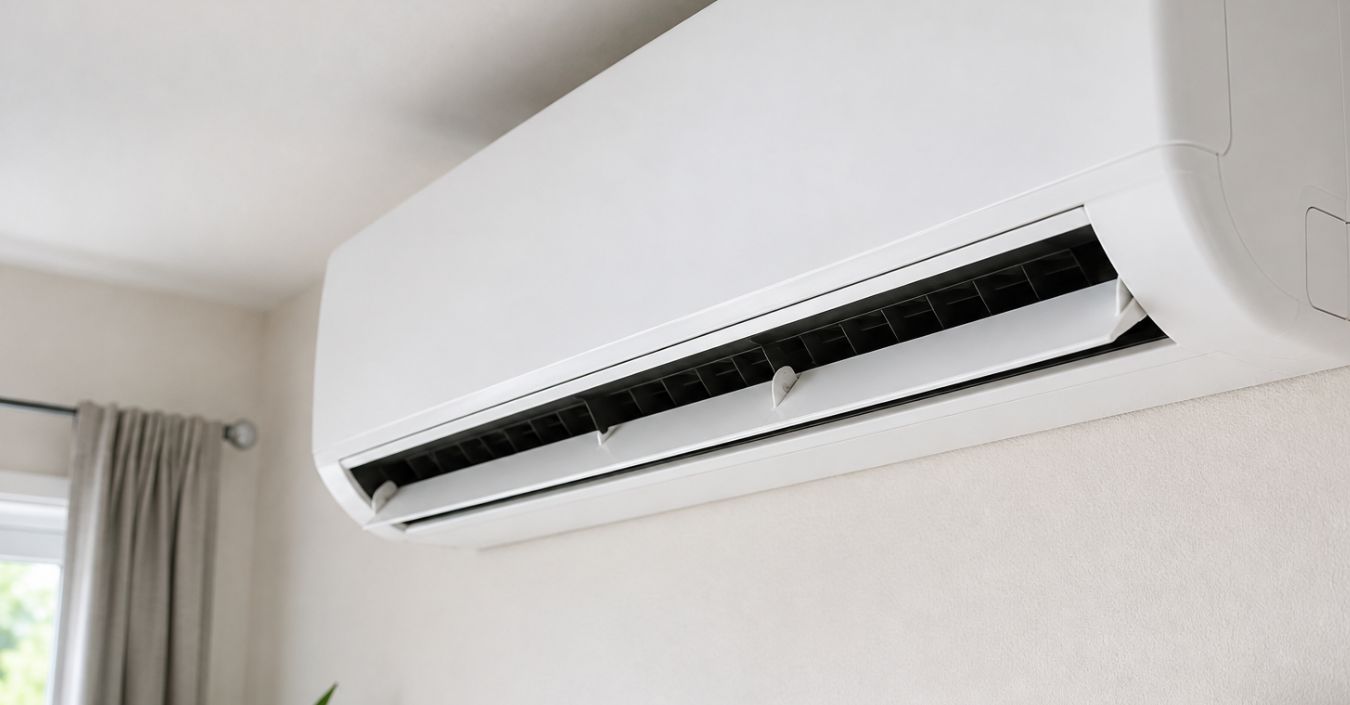
What Happens If You Never Clean Your Mini Split?
If you never clean your mini split, dust, dirt, pet dander, and other airborne debris can gradually accumulate on the filters and internal components of the system. Over time, this buildup can contribute to unpleasant odors, restricted airflow, dirtier internal surfaces, drainage concerns, and reduced overall performance.
For New York homeowners who rely on ductless systems throughout the cooling season, regular mini split cleaning is an important part of keeping the indoor unit clean. Mini splits continuously pull room air through filters and across components such as the evaporator coil and blower wheel. Although the filters capture some airborne material, they cannot prevent every particle from entering the system.
Skipping cleaning for months or years allows buildup to continue accumulating in areas that may be difficult to see from outside the unit. Understanding what can happen when a mini split is never cleaned can help you recognize why routine filter maintenance and periodic professional deep cleaning matter.
Dust Continues to Accumulate Inside the Mini Split
Every time your mini split operates, it pulls indoor air into the unit. That air can contain dust, pet hair, pollen, dander, and other small particles commonly found inside a home.
The filters are designed to capture some of this material before air travels farther into the system. As the filters become dirty, they need to be cleaned or maintained according to the manufacturer’s recommendations.
If the filters are neglected, dust continues accumulating. Fine particles may also collect deeper inside the indoor unit on surfaces that are not accessible during basic household cleaning.
After an extended period without maintenance, a mini split that looks relatively clean from the outside can contain substantial internal buildup.
Your Mini Split Filters Can Become Heavily Clogged
Filters are among the first components affected when a mini split is not cleaned.
As airborne debris collects on the filter material, the open areas available for air to pass through become increasingly restricted. A filter that began with only a light layer of dust can eventually become heavily coated.
Dirty filters can interfere with normal airflow into the indoor unit.
Cleaning reusable filters regularly is one of the simplest maintenance tasks homeowners can perform to help prevent excessive buildup from developing.
Airflow May Become Restricted
A mini split needs adequate airflow to distribute conditioned air throughout the room.
When filters and internal components become heavily coated with debris, airflow can be affected. You may notice that the air coming from the indoor unit does not feel as strong as it once did.
Restricted airflow can also make it more difficult for the system to distribute conditioned air effectively throughout the space.
Weak airflow can have mechanical causes as well, so cleaning should not be assumed to solve every airflow problem. However, if the unit is visibly dirty and has not been maintained for an extended period, cleaning is an important place to start.
The Blower Wheel Can Become Covered in Buildup
The blower wheel is located inside the indoor mini split and is responsible for moving air into the room.
Its design includes numerous surfaces where fine debris can gradually accumulate. Because the blower wheel is located beyond the filters, homeowners may not realize how dirty it has become.
Over time, buildup can become thick enough to be visible through the air outlet.
A dirty blower wheel generally requires more than simply removing and washing the filters. Professional deep cleaning can address this difficult-to-reach component when substantial buildup has developed.
The Evaporator Coil Can Become Dirty
The evaporator coil is another important internal component that can collect debris over time.
During cooling, indoor air passes across the cold coil. Moisture from the air condenses on its surface as part of normal air conditioning operation.
Although filters provide protection, fine particles can still reach the coil. If the mini split is never cleaned, debris can gradually accumulate on this surface.
Because the coil regularly encounters condensation, keeping it clean is an important part of overall ductless system hygiene.
Your Mini Split May Develop a Musty Smell
A musty or stale odor is one of the most noticeable problems associated with a dirty mini split.
Dust and other debris can accumulate on internal surfaces that are exposed to condensation during cooling. When moisture and buildup remain together, unpleasant odors may develop.
You may notice the smell most strongly when the mini split first turns on. As the blower begins operating, air moves across the internal components and carries odors into the room.
Cleaning the filters may help when they are the source of the problem. If the smell remains, deeper internal cleaning may be necessary.
Moisture and Debris Can Collect in the Drain Pan
Mini splits remove moisture from indoor air while cooling. Condensation from the evaporator coil collects in a drain pan before leaving the indoor unit through the condensate drainage system.
The drain pan can accumulate dust and other material over time.
If it is never cleaned, debris may remain in an area that routinely encounters moisture. This can contribute to stale odors and unsanitary buildup inside the unit.
Professional mini split cleaning can address accessible drainage areas along with other internal components that are difficult to reach through normal filter maintenance.
Drainage Problems Can Develop
The condensate drainage system needs a clear pathway to move water away from the indoor unit.
Buildup can contribute to drainage concerns when dirt and debris accumulate in areas responsible for handling condensation.
Possible warning signs include:
- Water dripping from the indoor unit
- Moisture appearing on the wall
- Water collecting around the mini split
- Recurring musty odors
- Visible buildup around drainage components
A leaking mini split should be evaluated promptly. While cleaning may resolve certain buildup-related drainage issues, water leaks can also result from mechanical or installation problems that require an HVAC professional.
Dirty Components Can Affect Mini Split Performance
Mini splits are designed to move air efficiently across their internal components. Allowing those components to become heavily contaminated can interfere with normal operation.
Dirty filters can restrict incoming airflow, while buildup on the blower wheel and coil can affect the surfaces responsible for moving and conditioning air.
You may eventually notice changes in airflow or how effectively the system maintains comfort.
Not every performance issue is caused by dirt. Refrigerant problems, electrical failures, damaged components, and other mechanical conditions require separate diagnosis. Cleaning addresses system hygiene rather than mechanical repair.
The System May Need to Run Longer
If heavy buildup interferes with airflow or heat transfer, the mini split may have a harder time maintaining the desired indoor temperature.
Depending on the condition of the system, this can contribute to longer operating periods.
Extended operation can mean the equipment is using energy for longer periods to provide the requested cooling.
Keeping filters and internal components clean helps remove cleanliness-related restrictions that could otherwise interfere with normal operation.
A Dirty Mini Split Can Affect Energy Efficiency
Several factors determine how efficiently a mini split operates, including equipment condition, thermostat settings, outdoor temperatures, building insulation, and mechanical performance.
Cleanliness is another factor worth considering.
When airflow is restricted by dirty filters or internal buildup interferes with the surfaces responsible for conditioning and distributing air, the system may not operate under ideal conditions.
Routine maintenance cannot guarantee a specific reduction in energy costs, but keeping the unit clean can help eliminate avoidable buildup that may interfere with efficient operation.
Dust May Become Visible Around the Air Outlet
A neglected mini split may eventually show visible signs of contamination.
Dust can collect on the louvers, around the air outlet, and on surfaces visible inside the indoor unit. In heavily contaminated systems, debris may also be visible on the blower wheel.
Wiping the exterior can improve the appearance of the unit, but it does not remove buildup located deeper inside.
If dirt quickly returns after surface cleaning, inspecting the internal components can help determine whether a deeper cleaning is necessary.
Debris May Be Distributed From the Indoor Unit
When the mini split operates, the blower moves air through the indoor unit and into the room.
If loose debris has accumulated internally, some material may become disturbed by airflow.
Homeowners may notice particles or debris around the air outlet or beneath the indoor unit.
Visible material coming from the mini split is a strong indication that the system should be inspected rather than simply cleaning the surrounding floor or furniture repeatedly.
Pet Hair and Dander Can Add to the Buildup
Homes with pets may experience faster mini split contamination.
Pet hair, dander, and outdoor debris carried on fur can become part of the indoor environment. Some of this material can eventually reach mini split filters.
If filters are not maintained regularly, buildup can become significant.
Homes with multiple pets may need to check filters and visible portions of their ductless units more frequently than homes with lower levels of airborne debris.
Cooking and Household Activity Can Contribute to Dirt
Dust is not the only material circulating through a home.
Normal household activities can introduce additional airborne particles. Units located near kitchens, busy living areas, entrances, or other high-use spaces may encounter different levels of buildup than mini splits installed in less frequently used rooms.
This is why two indoor units in the same house can become dirty at different rates.
Each mini split should be maintained according to its actual condition and usage rather than assuming every unit requires cleaning at exactly the same interval.
Renovation Dust Can Make the Problem Worse
Home improvement projects can introduce unusually high amounts of fine dust into indoor air.
Sanding, drywall work, cutting materials, flooring projects, and other construction activities can create particles that travel beyond the immediate work area.
If mini splits operate during a renovation, their filters may collect significant amounts of construction dust. Fine particles may also reach deeper components.
After substantial remodeling, inspecting and cleaning the ductless units can help remove material introduced during the project.
Heavy Summer Use Can Accelerate Buildup
New York’s hot and humid summer weather can keep ductless systems running for extended periods.
Every additional hour of operation means more room air passes through the filters and across the internal components.
The cooling process also creates condensation, particularly when indoor humidity is elevated.
A mini split receiving heavy summer use may therefore accumulate dirt differently than one that operates only occasionally. Regular inspection is especially useful during and after periods of frequent operation.
Ignoring the Mini Split Can Make Cleaning More Involved
Light surface dust is easier to address than years of accumulated buildup.
If a mini split receives regular filter maintenance and periodic cleaning, debris can be addressed before it becomes severe.
When the system is ignored for an extended period, dirt may become heavily accumulated on the blower wheel, coil, louvers, and other internal surfaces.
At that point, basic filter maintenance may no longer be enough, and a more thorough professional cleaning may be required.
Can a Dirty Mini Split Affect Indoor Air Quality?
Mini splits continually circulate air through the rooms they serve, making cleanliness inside the unit relevant to the indoor environment.
Dust, pet-related debris, and other particles can accumulate inside a neglected system. Loose material may also be disturbed as air moves through the indoor unit.
Cleaning a mini split is not a complete solution for every indoor air quality concern. Indoor air can also be influenced by ventilation, humidity, household activities, pets, outdoor pollutants, and many other factors.
However, removing significant buildup from equipment that continually circulates room air is a practical part of maintaining a cleaner indoor environment.
Can Mold Develop in a Dirty Mini Split?
Mini splits regularly encounter moisture because condensation forms during cooling. Dust and other organic material can also accumulate internally.
Persistent moisture combined with accumulated debris can create conditions that may support microbial growth on certain surfaces.
Homeowners should not assume that every dark substance inside a mini split is mold based on appearance alone. However, visible contamination, persistent musty odors, or significant moisture-related buildup should be taken seriously.
Professional cleaning can remove accumulated material from accessible internal surfaces and help restore a cleaner condition inside the unit.
Can a Dirty Mini Split Stop Working?
Severe neglect can contribute to conditions that interfere with normal operation, but dirt is not the only reason a mini split may stop working.
Ductless systems contain electrical and mechanical components that can fail independently of cleanliness.
If your mini split will not turn on, stops cooling, displays an error code, or has another mechanical problem, it may need diagnosis by an HVAC repair professional.
Cleaning and mechanical repair should be treated as separate services. Cool Clean Services specializes in mini split cleaning and ductless hygiene rather than mechanical AC repair or installation.
Is Cleaning the Filters Enough?
Filter cleaning is essential, but it does not clean the entire mini split.
The filters are located near the beginning of the airflow pathway. Deeper inside the unit are components such as the evaporator coil, blower wheel, drain pan, and other surfaces.
Over time, some debris can accumulate beyond the filters.
If your filters are clean but you still see dirt inside the unit, notice a musty odor, or observe heavy buildup on the blower wheel, professional deep cleaning may be appropriate.
What Can Homeowners Do to Keep a Mini Split Clean?
Homeowners can perform basic maintenance between professional cleanings according to the manufacturer’s instructions for their specific equipment.
This may include:
- Checking and cleaning reusable filters regularly
- Wiping accessible exterior surfaces
- Keeping dust and pet hair under control around the unit
- Watching for water leaks
- Checking visible areas for unusual buildup
- Scheduling deeper cleaning when necessary
Avoid spraying general household cleaners directly into the mini split or attempting extensive disassembly without the proper knowledge and equipment.
When Does a Mini Split Need Professional Deep Cleaning?
There is no single schedule that works for every ductless system.
How frequently deep cleaning is needed depends on system usage, household conditions, pets, humidity, filter maintenance, and other environmental factors.
Signs that professional cleaning may be appropriate include persistent musty odors, visible internal dirt, heavy blower wheel buildup, recurring debris around the outlet, and a unit that remains dirty after the filters have been cleaned.
A mini split that has gone years without deep cleaning is also worth inspecting even if obvious problems have not yet developed.
Don’t Wait Until the Mini Split Is Extremely Dirty
Routine cleaning is easier to manage when buildup is addressed before it becomes severe.
Waiting until the filters are completely clogged, the blower wheel is heavily coated, or strong odors are coming from the unit allows contamination to accumulate unnecessarily.
Checking the mini split periodically can help you identify changes earlier.
Regular filter maintenance combined with professional deep cleaning when needed provides a more complete approach to keeping a ductless system clean.
Final Thoughts About What Happens If You Never Clean Your Mini Split
If you never clean your mini split, dust and debris can continue accumulating on the filters, evaporator coil, blower wheel, drain pan, louvers, and other internal surfaces. Eventually, this buildup may contribute to restricted airflow, musty odors, drainage concerns, visible contamination, and changes in system performance.
For New York homeowners who use ductless systems extensively during hot and humid weather, keeping the indoor units clean is an important part of routine home maintenance. Basic filter cleaning can address everyday buildup, while periodic professional deep cleaning can reach components that are difficult to access through normal homeowner care.
Cool Clean Services specializes in professional mini split cleaning and ductless hygiene throughout its New York service area. If your mini split has gone an extended period without cleaning or you can see significant buildup inside the unit, professional deep cleaning can help remove accumulated material from areas that basic filter maintenance cannot reach.
Frequently Asked Questions About Cleaning a Mini Split
What happens if you don’t clean a mini split for years?
Dust, pet dander, and other debris can accumulate on the filters and deeper internal components. Over time, you may notice clogged filters, visible dirt, musty odors, reduced airflow, or significant buildup on components such as the blower wheel and evaporator coil. A heavily neglected unit may require professional deep cleaning.
How do I know when my mini split is too dirty?
Visible buildup inside the air outlet, a dirty blower wheel, persistent musty smells, debris coming from the unit, and problems that remain after filter cleaning are common signs that deeper cleaning may be necessary. You should also consider the unit’s usage and previous cleaning history.
Can I clean my mini split myself?
Homeowners can typically perform basic maintenance allowed by the manufacturer, such as cleaning reusable filters and wiping accessible exterior surfaces. Deep cleaning may require access to delicate internal components and specialized equipment. If substantial dirt has accumulated on the coil, blower wheel, or other internal areas, professional mini split cleaning is the safer approach.